


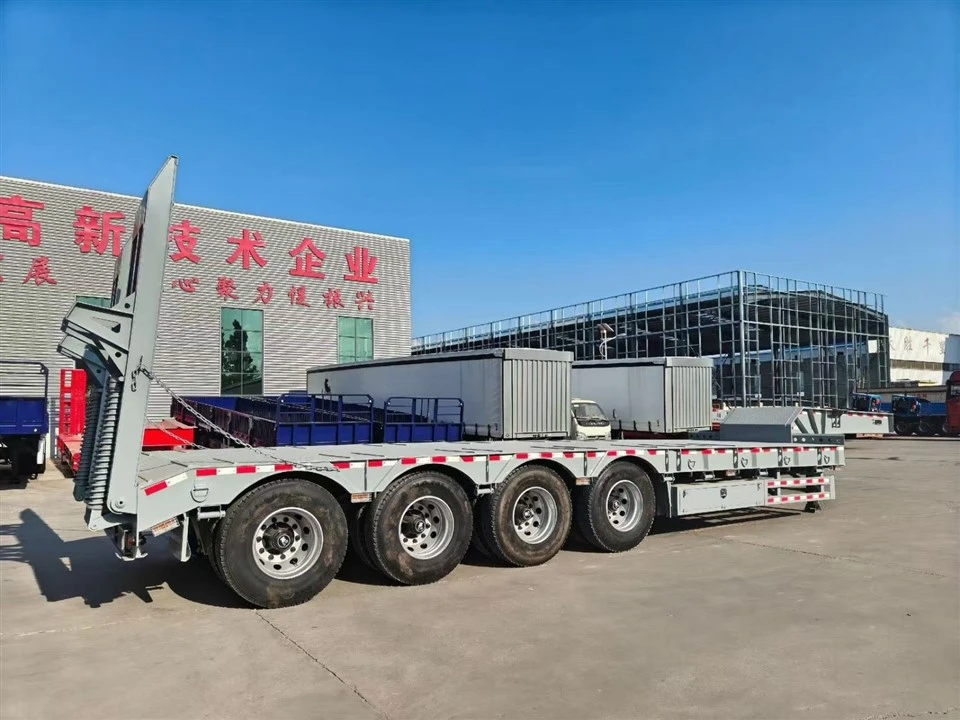
Adjusting the gooseneck height of a Gooseneck Lowboy Semi Trailer is a crucial task that can significantly impact the trailer's performance, safety, and the efficiency of your hauling operations. As a leading supplier of Gooseneck Lowboy Semi Trailers, I understand the importance of this adjustment and am here to guide you through the process.

Understanding the Importance of Gooseneck Height Adjustment
The gooseneck is a key component of a lowboy semi - trailer. It connects the trailer to the towing vehicle and plays a vital role in distributing the weight of the load evenly. Proper gooseneck height adjustment ensures:
- Optimal Weight Distribution: When the gooseneck height is set correctly, it helps distribute the weight of the cargo across the axles of the trailer and the towing vehicle. This reduces stress on individual axles, tires, and suspension components, preventing premature wear and tear.
- Safe Towing: A well - adjusted gooseneck height contributes to better stability while towing. It helps maintain the correct angle between the trailer and the towing vehicle, reducing the risk of swaying and jackknifing, especially at high speeds or on uneven roads.
- Load Clearance: Adjusting the gooseneck height can also ensure that the load on the trailer has sufficient clearance from the ground and other obstacles. This is particularly important when transporting tall or irregularly shaped cargo.
Tools Required for Gooseneck Height Adjustment
Before you start adjusting the gooseneck height, gather the following tools:
- Wrenches and Socket Sets: These are used to loosen and tighten the bolts and nuts that hold the gooseneck in place.
- Hydraulic Jacks: Hydraulic jacks provide the necessary lifting power to raise or lower the gooseneck. Make sure the jack has a sufficient weight capacity to handle the trailer's load.
- Level: A level is essential to ensure that the trailer is parked on a flat surface and to verify that the gooseneck is level after adjustment.
Step - by - Step Guide to Adjusting Gooseneck Height
Step 1: Prepare the Trailer
- Find a flat, stable surface to park the trailer. Engage the parking brake and chock the wheels to prevent the trailer from moving during the adjustment process.
- Conduct a visual inspection of the gooseneck and its connection points to the trailer. Check for any signs of damage, such as cracks, bent bolts, or worn - out parts. If any issues are found, they should be addressed before proceeding with the height adjustment.
Step 2: Determine the Desired Height
The desired gooseneck height depends on several factors, including the type of cargo you will be hauling, the towing vehicle's hitch height, and local regulations. You may refer to the trailer's user manual or consult with a professional for specific height recommendations.
- Measure the current gooseneck height from the ground to the center of the gooseneck coupling. This measurement will serve as a baseline for your adjustment.
Step 3: Loosen the Gooseneck Bolts
Use the appropriate wrenches or socket sets to loosen the bolts that secure the gooseneck to the trailer frame. Do not remove the bolts completely; just loosen them enough to allow for movement.
- It is important to loosen the bolts evenly to prevent misalignment of the gooseneck.
Step 4: Raise or Lower the Gooseneck
- Position the hydraulic jacks under the gooseneck at appropriate points. Make sure the jacks are stable and centered to avoid tipping.
- Slowly operate the hydraulic jacks to raise or lower the gooseneck to the desired height. Use the level to ensure that the gooseneck remains level during the adjustment process.
- As you adjust the height, keep an eye on the connection points between the gooseneck and the trailer frame to ensure that there is no binding or interference.
Step 5: Check the Height and Alignment
- Once the gooseneck is at the desired height, double - check the measurement from the ground to the center of the gooseneck coupling. Make any necessary fine - adjustments to ensure the accuracy of the height.
- Use the level to verify that the gooseneck is level both horizontally and vertically. This will help ensure proper weight distribution and towing stability.
- Check the alignment of the gooseneck with the trailer frame. The gooseneck should be centered and parallel to the frame. If misalignment is detected, adjust the position of the gooseneck accordingly.
Step 6: Tighten the Bolts
- Once the gooseneck height and alignment are correct, use the wrenches or socket sets to tighten the bolts that secure the gooseneck to the trailer frame. Tighten the bolts to the manufacturer's recommended torque specifications.
- Make sure to tighten the bolts evenly to prevent uneven stress on the gooseneck and trailer frame.
Common Issues and Troubleshooting
- Difficulty in Loosening or Tightening Bolts: If the bolts are rusted or seized, you may need to use a penetrating oil to loosen them. Apply the oil and let it sit for a few hours before attempting to loosen the bolts again. In some cases, you may need to use a torch to heat the bolts slightly, but be careful not to overheat the surrounding parts.
- Hydraulic Jack Failure: If the hydraulic jack fails to lift or lower the gooseneck, check the hydraulic fluid level and look for any signs of leaks. If the fluid level is low, refill it with the appropriate hydraulic fluid. If there is a leak, repair the leak before continuing with the adjustment.
- Uneven Weight Distribution: If you notice that the trailer is not sitting level after the gooseneck adjustment, it may indicate uneven weight distribution. Check the load on the trailer and redistribute it as necessary to ensure that the weight is evenly spread across the axles.
Our Product Range
As a supplier of Gooseneck Lowboy Semi Trailers, we offer a wide range of high - quality trailers to meet your specific hauling needs. Here are some of our popular products:
- Low Bed Reinforced Semi Trailer: This trailer is designed with reinforced structures to handle heavy and oversized loads. It offers excellent durability and stability.
- Extendable Low Bed Transport Trailer: Ideal for transporting long and bulky items, this trailer can be extended to accommodate different load lengths.
- Heavy Duty Hydraulic Ladder Low Bed Trailer: Equipped with a hydraulic ladder, this trailer makes it easy to load and unload heavy equipment.
- 3 Axle Lowboy Semi Trailer: With three axles, this trailer provides increased load - carrying capacity and better weight distribution.
- 17 Meter Low Bed Semi Trailer: This long - length trailer is suitable for transporting large - scale construction equipment and other oversized cargo.
Contact Us for Procurement
If you are interested in purchasing a Gooseneck Lowboy Semi Trailer or need further assistance with gooseneck height adjustment, please do not hesitate to contact us. Our team of experts is ready to provide you with detailed product information, technical support, and competitive quotes. We are committed to helping you find the best trailer solution for your business needs.
References
- Trailer manufacturer's user manuals
- Industry standards and regulations related to trailer safety and operation
- Professional trucking and trailer maintenance guides


